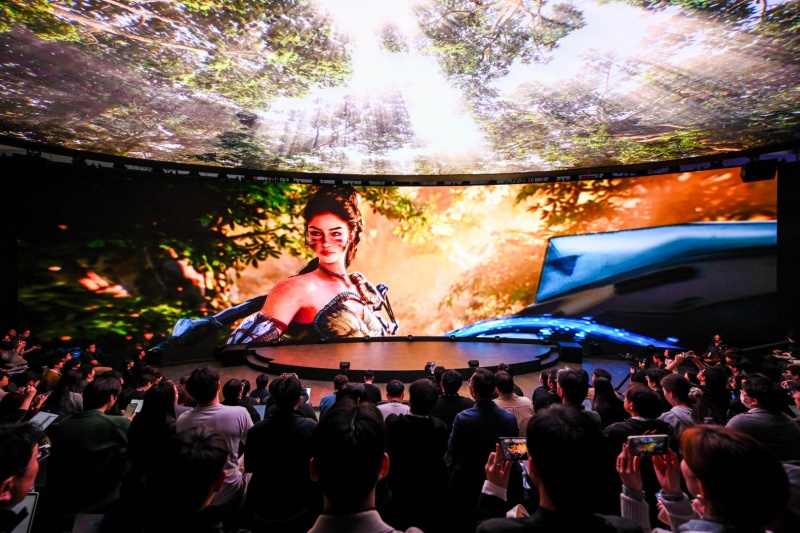
At a recent exhibition, we came across another brand's panoramic LED installation — an impressively long, curved display that immediately drew attention. But as the visuals moved across the screen, the uneven surface became difficult to ignore.
For immersive LED, size alone is not enough.
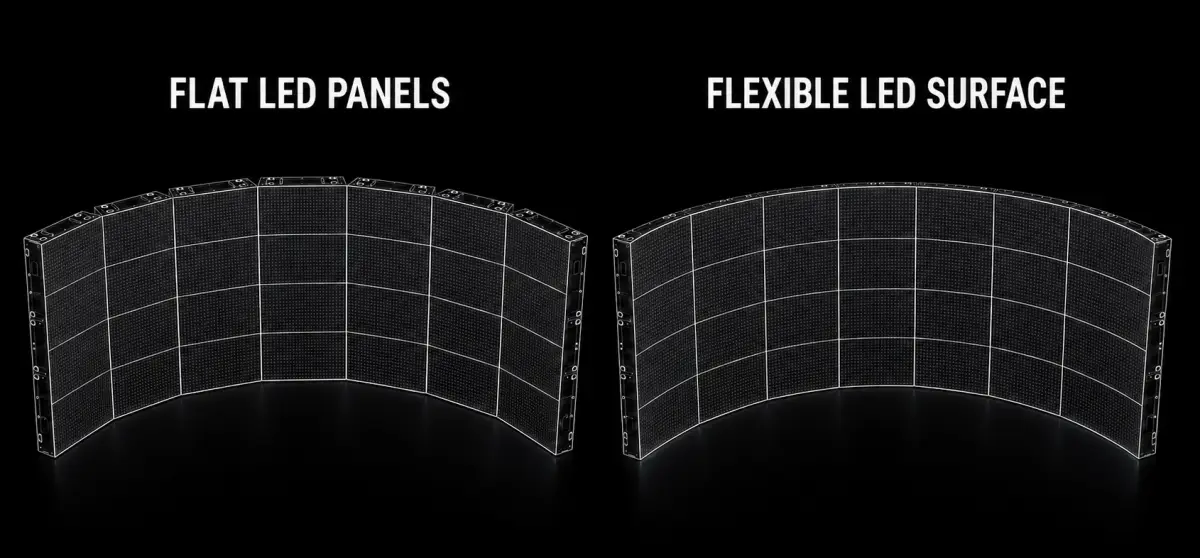
When a display curves around a space, even small differences in panel angle or alignment can interrupt the image. Reflections become inconsistent, straight lines appear distorted, and the screen begins to look like a collection of panels rather than one continuous visual environment.
Immersion Depends on the Surface
A conventional flat LED wall can rely on a straight supporting structure and standardized cabinets. Immersive displays are more demanding.
Panoramic screens, domes, spheres, and architectural LED surfaces must follow more complex geometries. Each section needs to transition smoothly into the next while maintaining the intended curve.
This is where flexible LED becomes important.
Flexible LED modules, curved cabinets, and custom mounting systems allow the display to follow the architecture instead of forcing the design into a flat rectangular format. They can support gradual panoramic curves, hemispherical theaters, spherical landmarks, and LED surfaces integrated into entrances, stages, and circulation areas.But flexibility alone does not guarantee a smooth result.
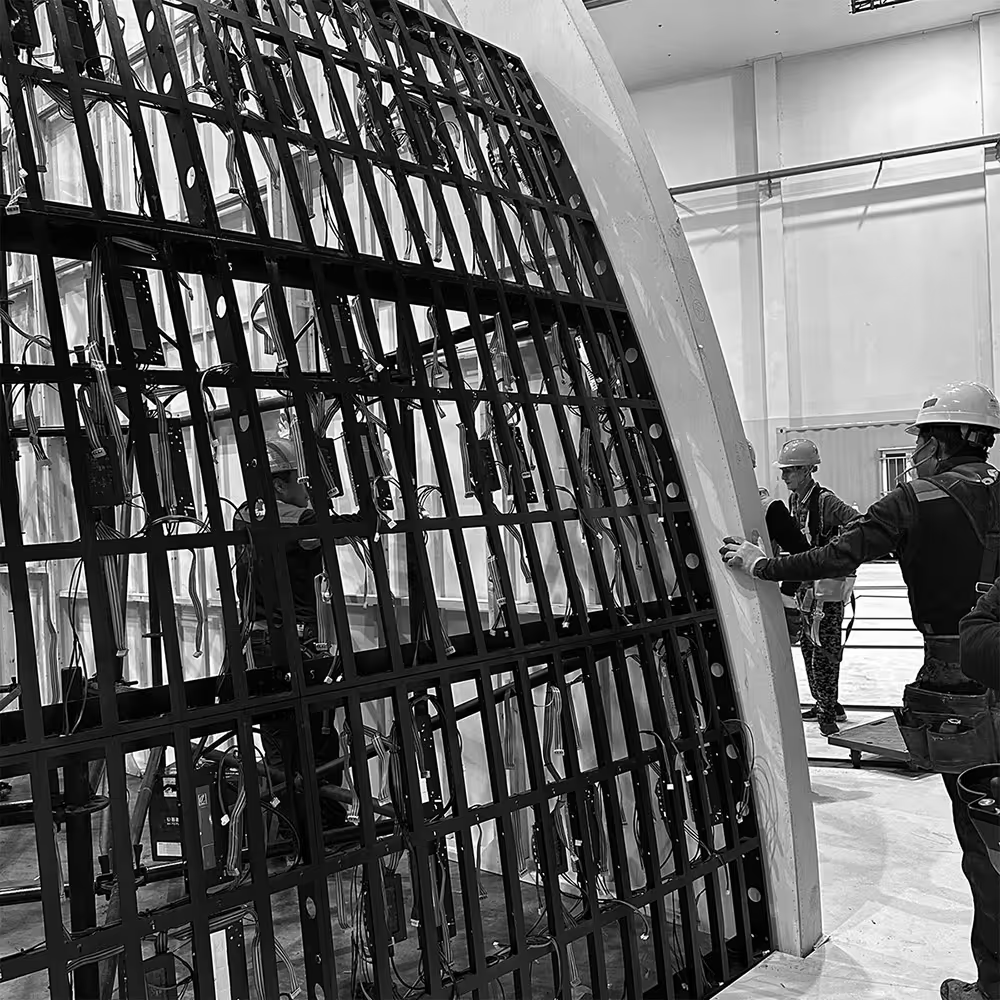
The supporting structure, panel alignment, curve radius, module tolerances, and content mapping must all be planned together. A flexible display system makes the shape possible; precise engineering makes the finished image feel continuous.
From Dome Landmarks to Spatial Experience
At Dome FLEX, we organize immersive LED environments around three primary form factors:
Each format uses curved LED differently. A Hero Type installation may become a sphere or sculptural centerpiece. A Facade Type display follows the architecture of the space. A Theater Type extends content across the audience's field of vision.
The common goal is not simply to create an unusual screen shape. It is to make the technology feel like a natural part of the environment.
A Curved Screen Should Still Feel Seamless
The success of immersive LED is often determined by what visitors do not notice: panel transitions, changes in angle, irregular reflections, or distortions across the surface.
When the structure, LED system, and content are developed as one environment, the screen stops feeling like assembled hardware. All three should move in sync, so the audience feels comfortable inside the space rather than aware of a screen.