Kinetic LED turns screens into moving spatial elements. Instead of functioning only as a fixed display surface, LED can become a door, threshold, stage component, reveal system, or architectural gesture within an event environment.
For exhibitions, product launches, gaming showcases, and brand activations, this movement can change how visitors enter a space, where they look, and how they experience the story. This article explores how kinetic LED works across event environments, from LED pivot doors to moving stage screens.
What Is Kinetic LED?
Kinetic LED is an LED system designed with physical motion. The screen can pivot, slide, open, close, divide, or re-form as part of the spatial choreography of an event.
A standard LED screen presents visual content from a fixed position. Kinetic LED adds movement to the screen environment itself, allowing LED to become part of the architecture, guest journey, reveal sequence, and stage direction. This makes kinetic LED especially powerful in environments where the screen needs to shape how people move through the space.
Why Motion Changes the Role of LED
In many event environments, LED is used as a background screen, content wall, or visual surface. Kinetic LED expands that role by adding physical movement to the screen structure.
When an LED system moves, it can guide attention, create anticipation, control the pace of entry, and support a reveal. The movement becomes part of the creative direction, not only a technical effect. This is why kinetic LED appears across product launches, immersive exhibitions, automotive events, gaming showcases, and large-scale brand activations.
Kinetic LED as a Pivot Door
One of the clearest ways to understand kinetic LED is through the LED pivot door.
A kinetic LED pivot door works as both a media surface and a spatial transition. When closed, it creates a strong visual façade. When it opens, it changes the visitor's relationship to the space, turning entry into a reveal moment. The screen does not only show the story. It becomes the doorway into the story.
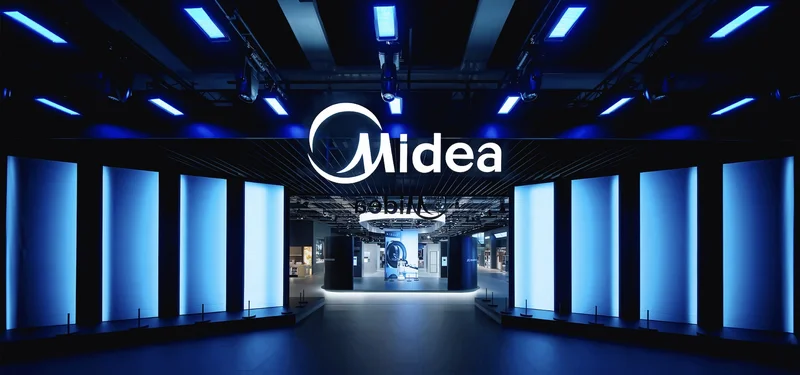
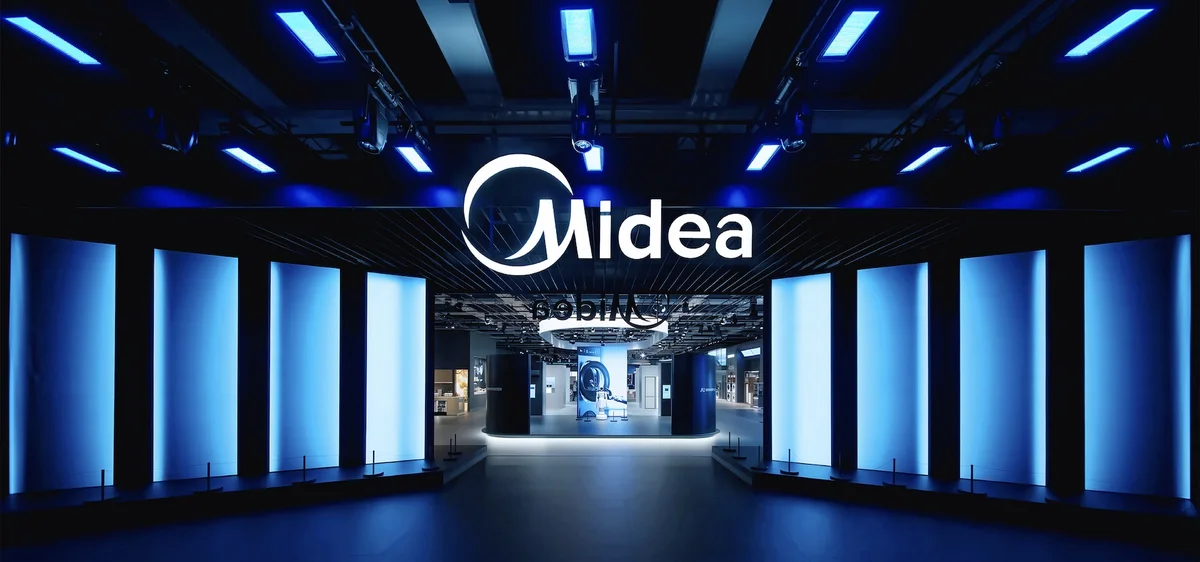
Midea 2025 IFA Berlin: LED Pivot Door as an Entrance Narrative
Midea at IFA Berlin 2025 presented a large-scale exhibition spanning 3,220㎡ across Halls 5.1 and 6.1, attracting over 74,000 visitors during the show. The overarching concept was "Unfold," built around the brand philosophy "Humanizing Technology."
At the entrance, a large LED pivot door made that concept physical. As visitors approached the booth, the pivot door opened to suggest that technology was not something complex or distant, but something that naturally unfolds into everyday life. The motion of the LED door translated the brand message before visitors had taken a single step inside.
In this case, the kinetic LED pivot door was not a decorative element. It was the first chapter of the brand story.
NC 2025 G-STAR B2C: LED Doors as a Cinematic Threshold
G-STAR is South Korea's premier gaming exhibition, held annually at BEXCO in Busan. The event draws over 200,000 visitors across four days and serves as a key platform for new title launches and global brand positioning in the gaming industry.
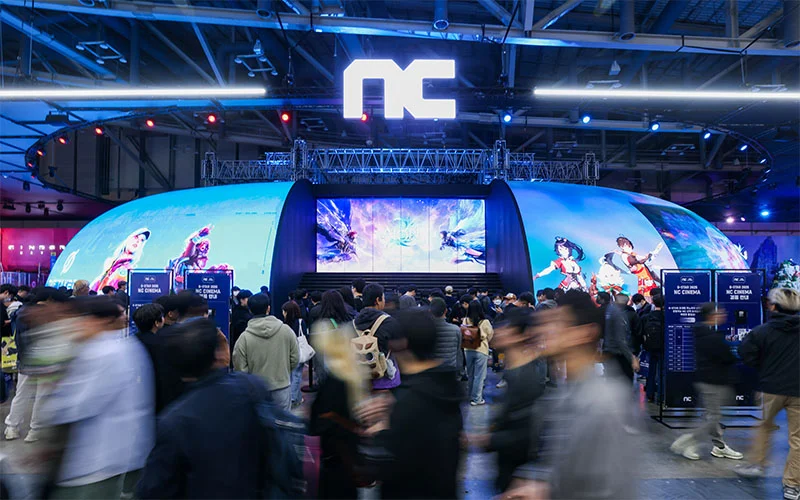
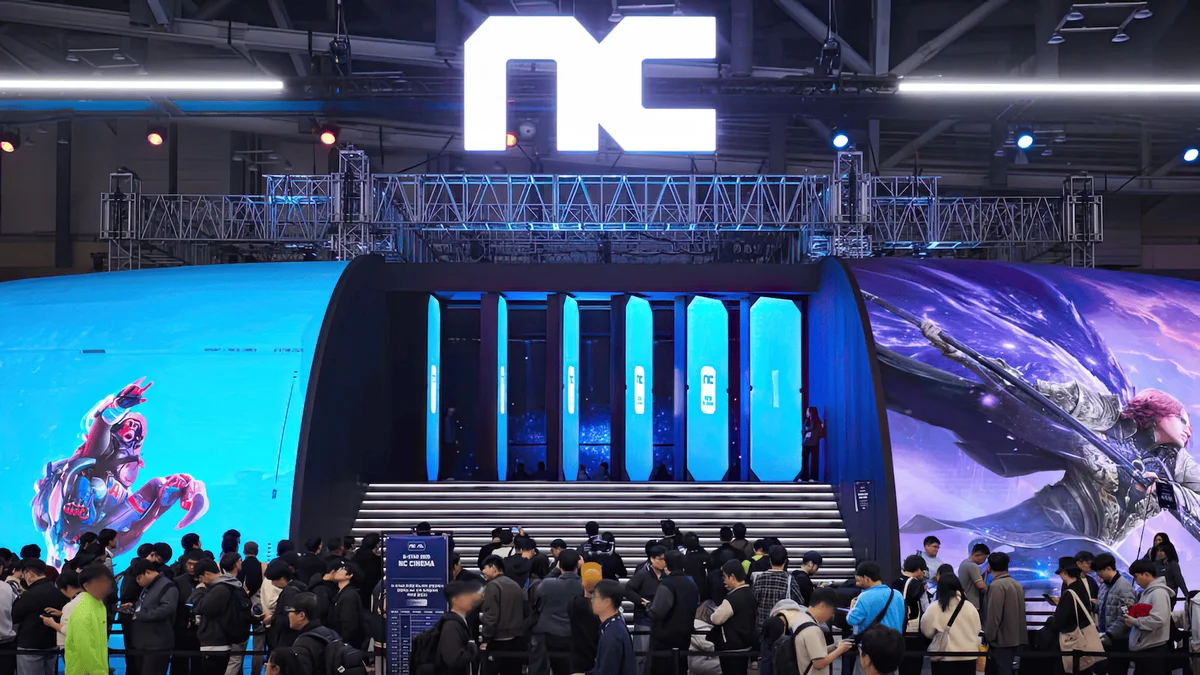
For G-STAR 2025, NC came in as the main sponsor with the largest booth footprint in the B2C hall, at 2,993㎡ (32,217 sq ft), roughly the size of seven NBA basketball courts. The challenge was unifying five distinct game IPs, including the highly anticipated AION2, into a single cohesive experience. The creative concept was "Cinema," built around the slogan "Infinite Worlds, One Journey."
The experience was designed as a sequential journey. Visitors entered through a kinetic LED pivot door that served as a cinematic threshold. It signaled that they were crossing from the exhibition floor into a different world. That pivot door led directly into a dome LED installation, then into an internal cinema where all five IPs were presented through a cinematic lens, before opening into the hands-on demo zone.
The kinetic LED entrance controlled the pace of entry, built anticipation, and made the transition into the brand world feel intentional rather than incidental. At peak hours, visitors waited up to 300 minutes for game demos, a clear measure of how effectively the spatial journey created demand. See the full NC 2025 G-STAR B2C case study.
Kinetic LED as Stage Motion
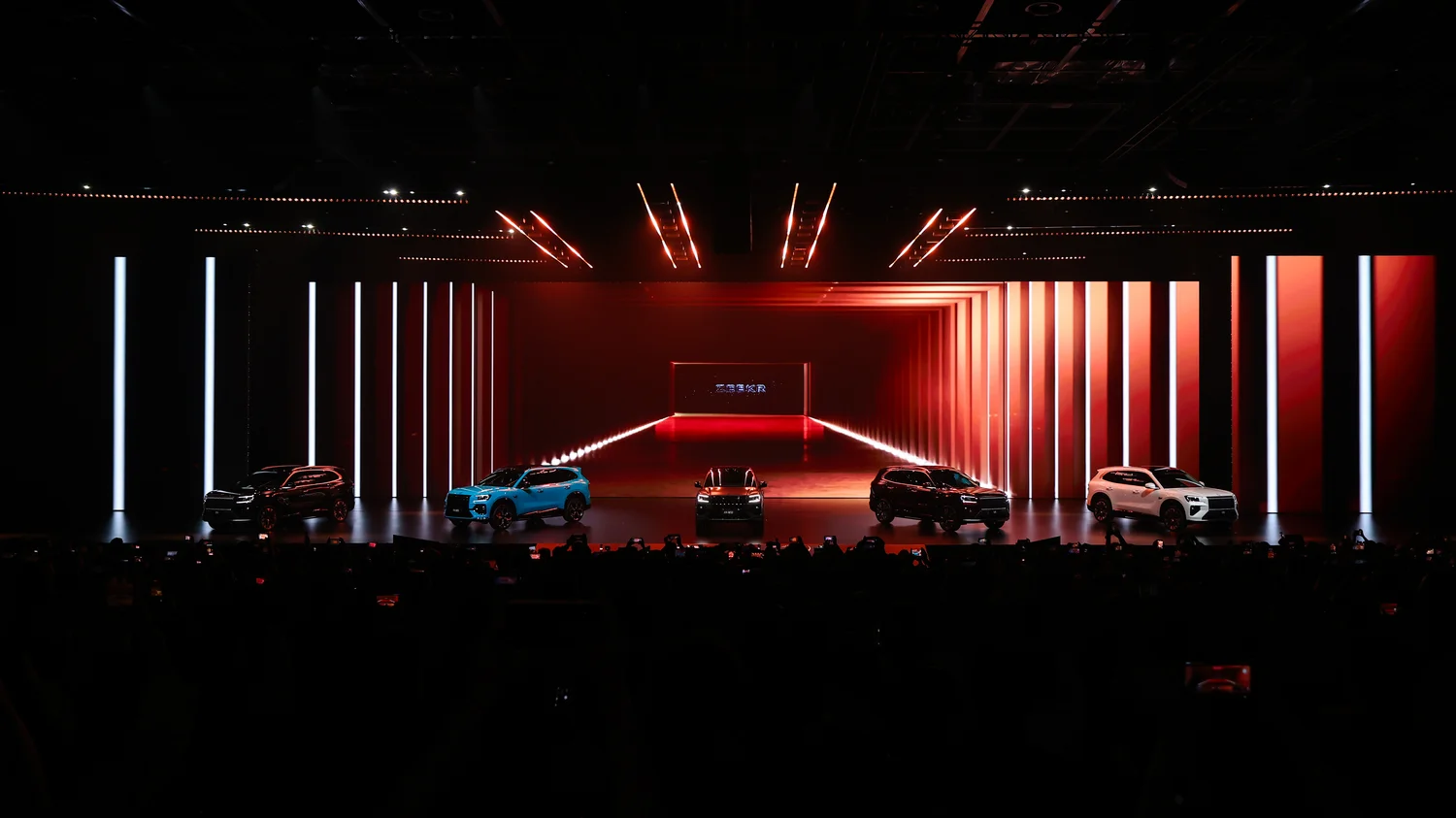
Kinetic LED can also operate at the scale of the main stage. For the ZEEKR 8X launch, a 54m × 13m panoramic kinetic LED screen built from 2,808 panels became the centerpiece of the reveal sequence. The screen framed the vehicle entrance, created layered depth around the car, and separated into planes to allow the vehicle to move between screen layers before returning to a single panoramic display.
In this case, kinetic LED did not just provide visual scale. It controlled timing, guided attention, and turned the stage into an active part of the reveal. See how the full kinetic LED stage design came together for the ZEEKR 8X launch.
Pivot Doors and Moving Stage Screens Serve Different Moments
LED pivot doors and moving stage screens are both forms of kinetic LED, but they support different parts of the event experience.
| Application | Primary Role | Experience Created |
|---|---|---|
| LED Pivot Door | Entrance, transition, threshold | Turns entry into a reveal moment |
| Moving LED Stage Screen | Main stage, product reveal, show direction | Turns visual content into spatial motion |
| Kinetic LED Display | Brand activation, exhibition, immersive environment | Connects media, architecture, and visitor movement |
While LED pivot doors shape the moment of entry, kinetic LED stage systems shape the moment of reveal. Both use motion to turn visual content into a spatial experience.
From Display Surface to Spatial Choreography
Kinetic LED changes the role of LED within an event environment. It allows screens to become doors, thresholds, stage elements, reveal systems, and architectural gestures.
For brand activations, exhibitions, and product launches, this movement can help define how visitors enter, where they look, and how they experience the story. Whether used as a kinetic LED pivot door or a panoramic moving stage screen, kinetic LED gives physical form to brand storytelling.
Plan Your Event with Kinetic LED
From LED pivot doors to moving stage screens, we help brands turn LED into motion-driven event environments.
Discuss your project →FAQ for Kinetic LED
What is kinetic LED?
Kinetic LED is an LED system designed with physical motion. Instead of staying fixed in one position, the LED screen can pivot, slide, open, close, divide, or move as part of the event environment. This allows LED to function as a stage element, entrance feature, reveal system, or spatial storytelling device.
What makes kinetic LED different from a standard LED screen?
A standard LED screen displays visual content from a fixed position. Kinetic LED adds physical movement to the screen itself, allowing the LED structure to shape the visitor journey, reveal sequence, and spatial experience. It can support entrances, transitions, product reveals, and immersive brand environments.
What kinds of events use kinetic LED?
Kinetic LED is used across event types where the screen needs to do more than display content. Common applications include product launches, automotive reveals, consumer electronics exhibitions, gaming showcases, and large-scale brand activations. It is particularly effective when the entrance experience, reveal sequence, or stage direction is a key part of the creative concept.