At large trade shows, LED does not have to stay on walls or stages. At Gamescom 2026, we saw hanging LED spheres used in two different ways to turn the space above the booth into part of the experience.
A hanging LED sphere is a spherical LED display suspended above a booth or stage using a rigging system. Its elevated position and curved display surface allow it to play a different role from a conventional LED wall.
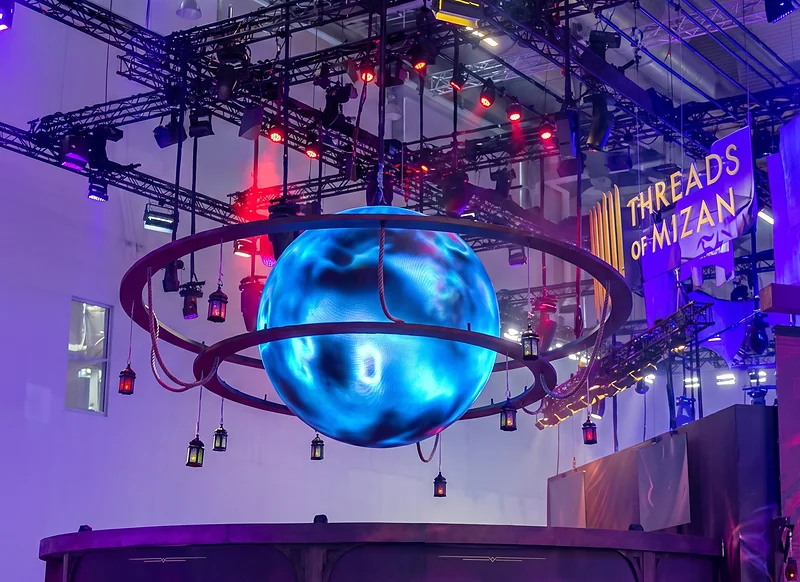
At the 1001 Threads of Mizan booth, the sphere and its surrounding rings drew directly from the game’s worldbuilding rather than functioning as a generic overhead display.
Gamescom 2026: Turning Game Lore Into a Spatial Object
At the 1001 Threads of Mizan booth at Gamescom, a compact LED sphere hung above the exhibition space inside a series of large intersecting rings. 1001 Threads of Mizan is set in an Arabian fantasy world, with its trailers featuring mystical environments, large-scale structures, and celestial-inspired imagery. The booth carried that visual language into the physical space through the glowing sphere and surrounding rings. Rather than functioning as another screen above the booth, the sphere became part of the overall scene. Its shape, lighting, and ring structure helped extend the game’s visual identity into the exhibition environment. This is especially effective in gaming exhibitions, where recognizable visual elements from an IP can move beyond trailers and wall graphics. A spherical LED display can give those elements physical volume and place them directly within the booth environment.
For more examples of how LED can extend a game world into physical space, see our guide to Dome LED theater for gaming exhibitions.
Why Use a Hanging LED Sphere at a Trade Show?
Easier to Spot Across the Show Floor
Large exhibition halls are visually crowded. Booth graphics, signage, product displays, structures, and visitors all compete for attention. A hanging LED sphere places a prominent digital element above much of that activity. Visitors can notice the sphere before they are close enough to read booth signage or see product details. Its spherical form also allows people to see the display from multiple directions, which can help when several aisles lead toward the same booth.
Turns the Screen Into an Object
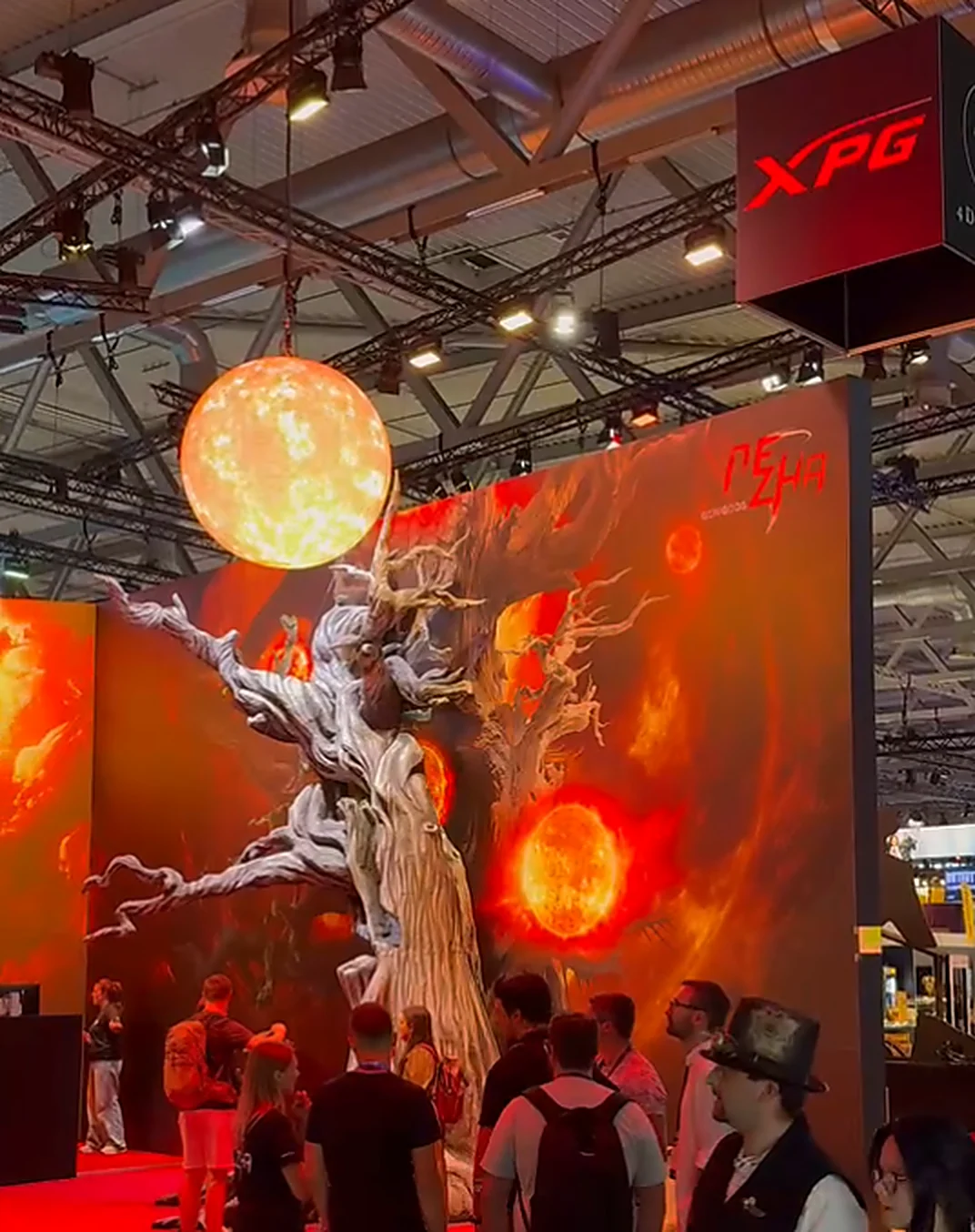
At the Genigods: Nezha area, the booth recreated a key visual motif from the game: the Sun Tree surrounded by multiple suns.
In the game, the Sun Tree connects the mortal and celestial realms, while the player must climb it and shoot down nine suns to save a world scorched by their heat. The booth brought that imagery into physical space with a large tree-like scenic structure, fiery wall graphics, and a glowing LED sphere suspended above the tree.
Here, the hanging LED sphere did more than add another screen. It read as one of the suns from the game world, helping connect the scenic structure and wall graphics into a recognizable scene from the IP.
What to Consider When Using a Hanging LED Sphere
Quick Tip: Check More Than the Rigging
When planning a hanging LED sphere, the project team should check total weight, rigging points, suspension height, and viewing distance early in the booth design process.
Another detail that is easy to overlook is color matching. The same color code can look different on an LED display and in printed graphics. This difference becomes especially noticeable when the sphere appears next to a graphic wall or brand logo.
The team should check LED brightness and color against the surrounding graphics under actual booth lighting. Small adjustments can help the digital display feel more visually consistent with the rest of the environment.
Content also needs to match the actual size of the sphere.
This is especially important when creating anamorphic or perspective-based effects that need to appear three-dimensional from a specific viewing position.
The result can change with the sphere’s diameter, curvature, resolution, and viewing distance. On a smaller sphere, the same visual treatment may make forms look compressed or distorted.
Designers should develop the visual effect and content mapping for the actual sphere dimensions.
For more on sphere sizing, viewing distance, pixel pitch, and content planning, see our LED Sphere Rental for Events guide.
When a Hanging LED Sphere Works Best
A hanging LED sphere works best when its shape and position have a clear role in the booth concept.
At Gamescom, the strongest examples did more than place a spherical screen overhead. The sphere became part of the game’s visual world, whether as a recognizable object or as an extension of the booth’s overall imagery.
For gaming, entertainment, and technology brands with strong visual IP, this can be a practical way to bring digital content into the physical exhibition space.
Plan Your Trade Show with a Hanging LED Sphere
From overhead booth landmarks to immersive brand environments, DOME FLEX develops hanging LED sphere solutions around the booth, content, venue, and installation requirements.
Hanging LED Sphere FAQ
What is a hanging LED sphere?
A hanging LED sphere is a spherical LED display suspended above a trade show booth, stage, or event space using a rigging system. Visitors can see its curved display surface from multiple directions, making it useful as an overhead landmark or 360-degree visual object.
Can an LED sphere be suspended above a trade show booth?
Yes. Before installation, the project team should check the sphere’s total weight, rigging points, suspension height, and venue height restrictions.
What should you consider when installing a hanging LED sphere?
Key considerations include total suspended weight, rigging conditions, suspension height, and expected viewing distance. If the sphere appears alongside graphic walls or brand logos, the team should tune the LED brightness and color to match the surrounding graphics as closely as possible.
What type of content works well on a hanging LED sphere?
Content that works naturally with a spherical form and remains recognizable from a distance is generally the most effective. Examples include planets, suns, globes, energy effects, game objects, and brand symbols.
Designers should tailor anamorphic or perspective-based effects to the sphere’s size, curvature, resolution, and intended viewing position.