LED screen rental can turn a trade show booth, conference stage, or product launch into a focused visual environment.
But choosing an LED screen involves more than deciding how large the display should be. The venue, viewing distance, installation requirements, content plan, and production schedule can all affect the final setup and cost.
Before requesting a rental quote, it helps to understand a few basic factors that shape the project.
What Type of LED Screen Do You Need?
The right LED screen depends on where it will be installed, what it needs to display, and how close the audience will be.
A screen inside a trade show booth has different requirements from a large stage backdrop. An outdoor screen also needs a different specification from one installed inside a ballroom or convention center.
Common rental applications include trade show LED walls, conference screens, stage backdrops, product launch displays, outdoor screens, panoramic displays, and curved or custom LED configurations.
Indoor vs. Outdoor
Indoor and outdoor LED screens are designed for different viewing conditions.
Outdoor LED generally requires higher brightness and weather-resistant equipment. Indoor LED is typically built for closer viewing, so it can use a finer pixel pitch.
Pixel pitch is the distance between individual LED pixels, measured in millimeters. A smaller pitch looks sharper at close range.
The surrounding environment also matters. A screen inside a dark ballroom does not need to perform under the same conditions as one positioned near glass walls, strong exhibition lighting, or an open entrance.
Viewing distance, ambient light, and indoor or outdoor use should be confirmed before the LED specification is finalized.
Why Does the Venue Matter for LED Screen Rental?
The venue can have a major impact on both the installation plan and the total project cost.
Venue rules are especially important at convention centers and large trade shows. Depending on the venue and event, certain tasks may fall ㅇunder union jurisdiction or need to be handled by the show's official service contractor.
This can include material handling, installation and dismantling, rigging, electrical work, and some AV services.
Two LED walls of the same size can therefore have very different total costs depending on where they are installed.
At some show sites, a significant portion of the project cost comes from required labor and venue services rather than from the LED equipment itself.
Installation access and the show schedule also matter. LED systems need time for assembly, configuration, testing, and content checks before the event opens.
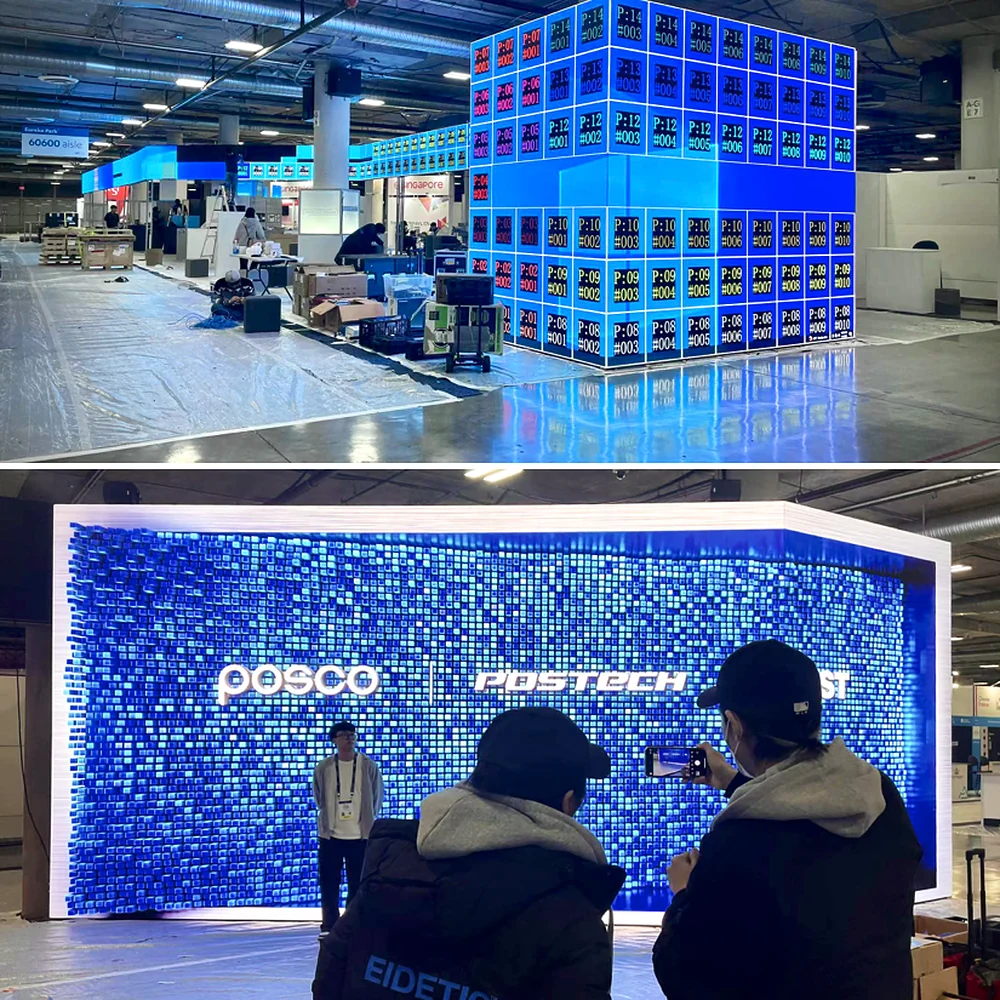
Share the venue and show details early so labor requirements, access, and the production schedule can be reviewed before the installation plan is finalized.
What Content Will Be Shown on the LED Screen?
The content plan should be defined before the final LED system and playback setup are confirmed.
A screen used for a looping brand video may need a simple playback workflow. A product presentation, live stage production, or panoramic installation may require a different screen layout and content setup.
Common uses include promotional videos, presentation slides, live camera feeds, product presentation content, performance-synced visuals, and panoramic spatial content.
The physical format of the LED also affects how content should be created.
A standard 16:9 video may work for a conventional rectangular screen. A panoramic display, curved wall, or unusually wide stage backdrop often requires content designed for the actual pixel dimensions of the final LED canvas.
Product Presentation Content
At trade shows and product demonstrations, LED screens are often used as the main visual surface for a live presentation.
The screen can introduce a new product, display key visuals, reinforce product messaging, and support a presenter during a scheduled session.
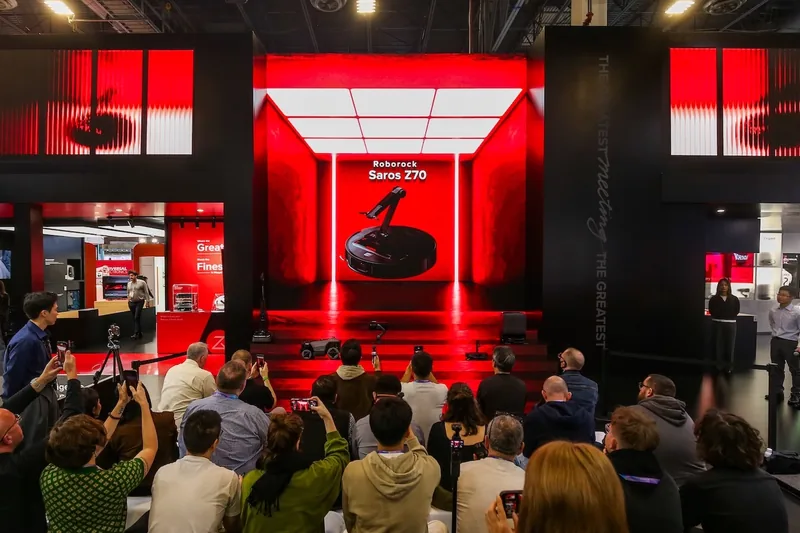
At Roborock's CES 2026 exhibition, the stage LED framed the product presentation and kept product visuals clearly visible to the audience gathered in front of the booth.
In this type of setup, the screen is part of the presentation rather than simply a background graphic. Content should remain clear and easy to follow from different viewing distances.
See the full Roborock CES 2026 exhibition case study.
Performance-Synced Content
For stage productions and launch events, LED visuals can also be synchronized with choreography, music, and show cues.
At the Lynk & Co 900 launch event, visual trails followed the dancers across the LED surface as part of the performance. The LED became part of the choreography rather than functioning as a static backdrop.
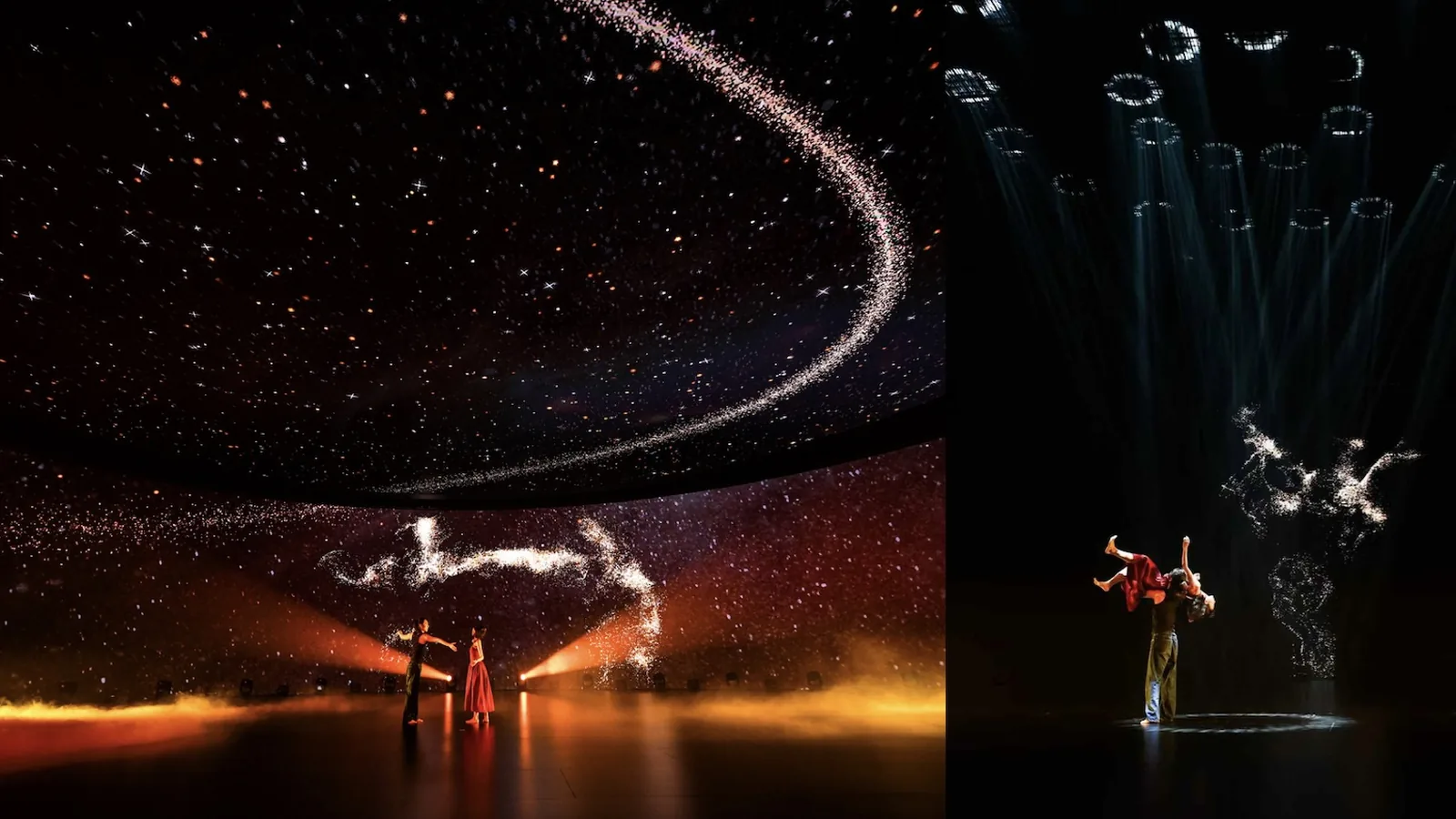
See the full Lynk & Co 900 Launch Event case study.
This type of content requires coordination between the creative and production teams because playback timing, show cues, and screen dimensions all affect the final result.
Panoramic Content
Panoramic content is designed for an LED surface that extends much wider than a standard screen.
Instead of stretching a conventional 16:9 video across a long display, the content should be composed for the full LED canvas. This allows motion, graphics, and brand elements to move naturally across the space.
At CES 2023, POSCO's CHANGeUP GROUND pavilion in Eureka Park used a long panoramic LED installation along the booth structure, with content created specifically for the wider screen format.
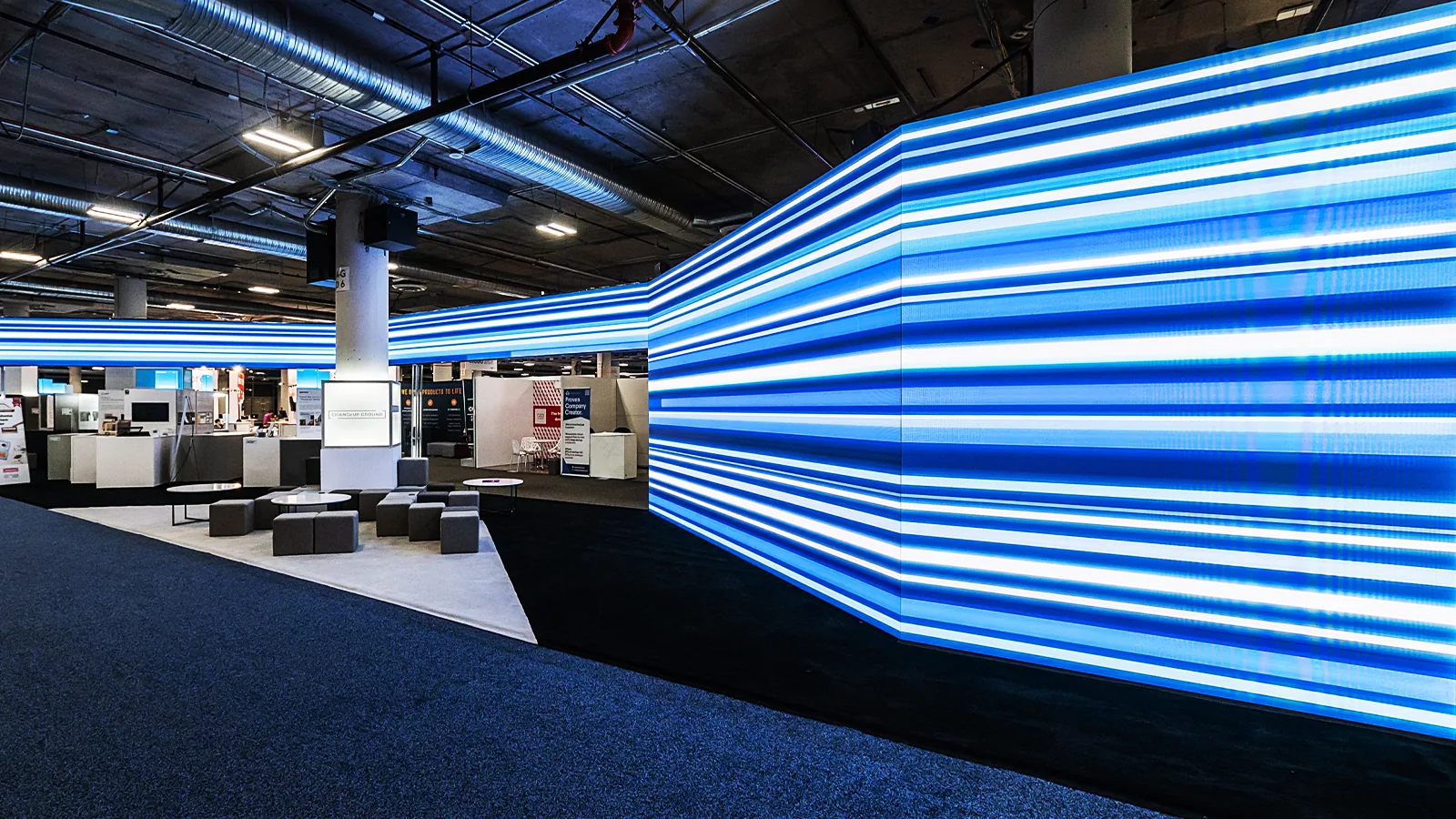
See the full POSCO CES exhibition case study.
Graphics designed for a standard monitor may feel repetitive or disconnected when stretched across a much wider surface.
For more on how flexible LED modules support curved and non-standard display surfaces, see Flexible Dome LED for Smooth Immersive Displays.
The intended content should be discussed early because it can affect the screen format, playback system, and final production workflow.
How Is Content Connected to an LED Screen?
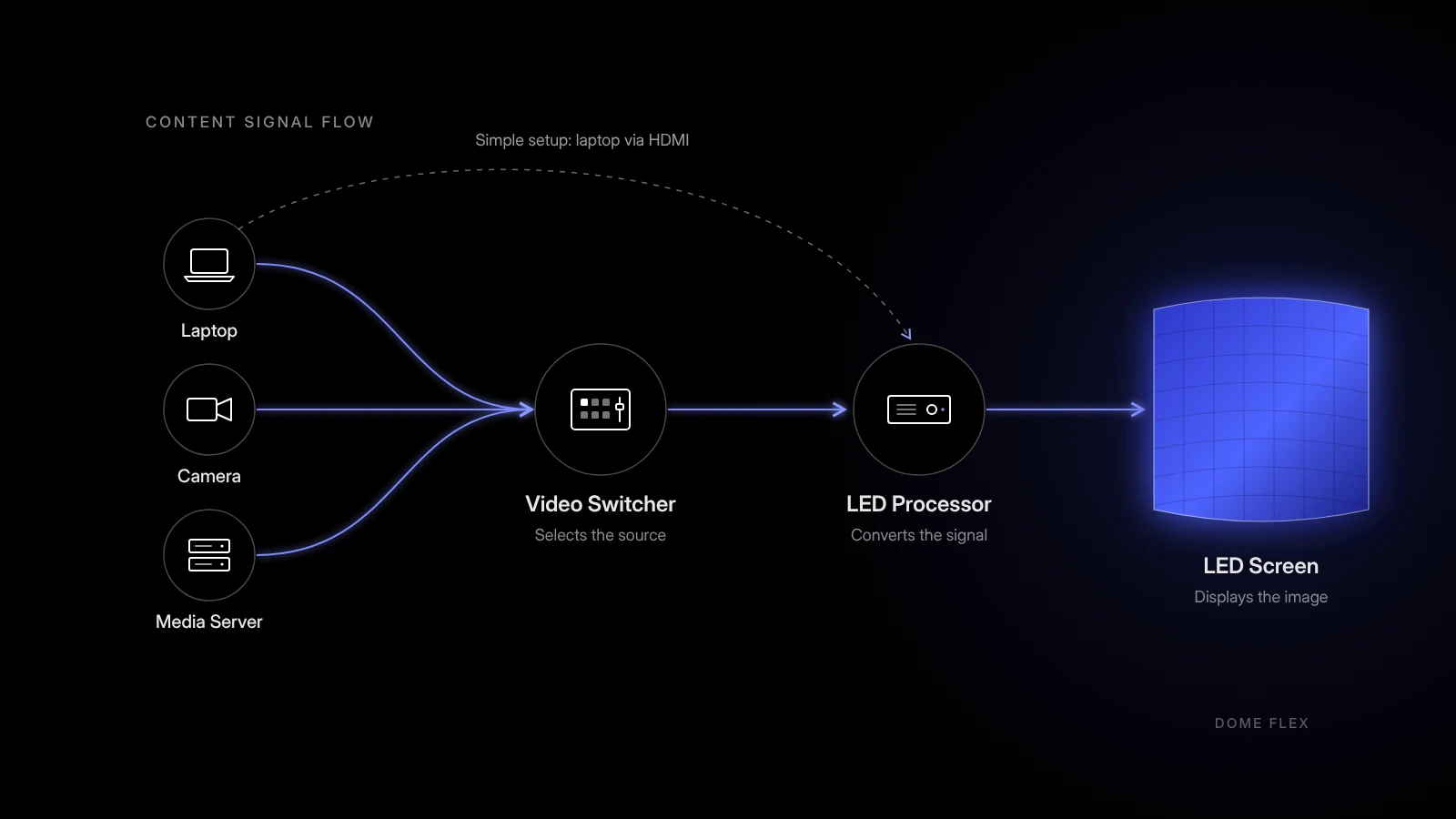
Most event LED systems use a playback source that sends a video signal through an LED processor before the image appears on the screen.
An LED processor converts the video signal into data the LED panels can display.
For a simple presentation, the signal path may be:
Laptop → HDMI → LED Processor → LED Screen
For productions with several sources, the workflow may include a video switcher:
Laptop / Camera / Media Server → Video Switcher → LED Processor → LED Screen
A video switcher allows the production team to select and manage multiple video sources during the event.
You usually do not need to choose the LED processor yourself.
What matters is telling the LED provider where the content will come from and how the screen will be used.
For example, confirm whether you are connecting a laptop, using live cameras, working with a separate AV team, or running several content sources.
The playback workflow should be confirmed before the production team arrives on site.
What Should You Provide for an LED Rental Quote?
You do not need a complete technical specification to begin an LED rental quote.
Start with the basic project information:
- Event or show name
- Venue and city
- Move-in, event, and dismantle dates
- Indoor or outdoor location
- Approximate screen dimensions
- Type of content and playback source
If the LED screen is part of a trade show booth, stage, or custom spatial design, floor plans or renderings are also useful.
An exhibitor manual can be especially helpful for convention center projects because it may identify labor, rigging, electrical, and show-site service requirements.
Once the venue, schedule, screen size, and intended use are clear, the LED provider can recommend the appropriate screen configuration and supporting equipment.
For spherical display projects, see LED Sphere Rental for Events: Size, Cost & Content for more on sphere size, viewing distance, and content planning.